
Why is it Called 'Mocha'? The Surprising History of Coffee
Did you know that your daily cup of coffee is more than just a morning ritual?
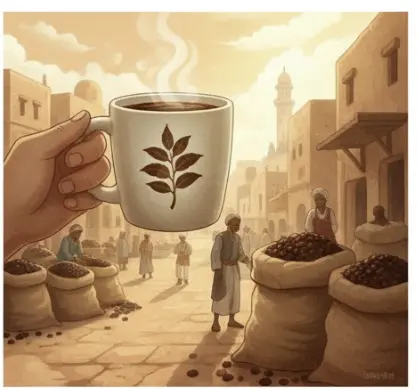
It is a liquid artifact of global history.
As of early 2026, the global coffee market has surpassed a staggering $500 billion valuation, with South Korea maintaining its position as one of the top five consumers per capita worldwide.
Despite the rise of high-tech brewing methods and synthetic caffeine alternatives, the heart of coffee culture remains rooted in a 1,000-year-old journey.
Whether you are sipping a classic Americano or a rich Cafe Mocha, you are participating in a tradition that spans from the highlands of Ethiopia to the bustling ports of the Arabian Peninsula.
In this post, we explore the surprising origins of the word 'Mocha' and the legendary discovery that changed human productivity forever.
The Port of Mocha, Not a Flavor
Many coffee lovers assume that 'Mocha' is simply a culinary term for a chocolate-flavored latte.
However, the etymology of Mocha is strictly geographical.
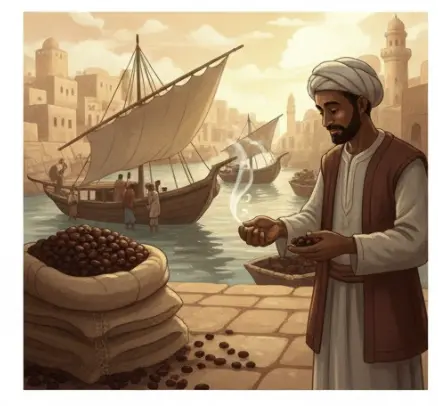
The name originates from the Port of Al-Mukha (Mocha) in Yemen.
During the 15th to 18th centuries, Mocha was the most significant coffee marketplace in the world.
It held a virtual monopoly on the global coffee trade before the plant was successfully cultivated in Java and the Americas.
The beans exported from Yemen were famous for their distinct, natural cocoa-like profile, a result of the unique soil and dry-processing methods used in the region.
European traders, mesmerized by this flavor, began calling all premium coffee from this port 'Mocha coffee.'
As chocolate became a popular companion to coffee in 19th-century Europe, the term evolved to describe the specific beverage we enjoy today, blending espresso with chocolate to mimic those ancient, earthy Yemeni notes.
The Legend of Kaldi and the Discovery of Coffee
While Yemen commercialized coffee, its biological origin belongs to Ethiopia.
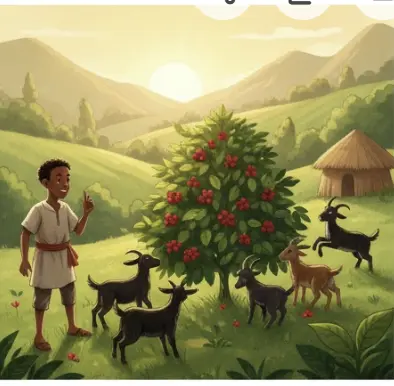
The most enduring tale of coffee’s discovery is the legend of Kaldi, a 9th-century goatherd (often referred to as a shepherd in popular lore).
The story goes that Kaldi noticed his herd behaving with extraordinary energy 'leaping' and 'dancing, after consuming bright red berries from a wild shrub.
Intrigued, Kaldi tried the fruit himself and experienced a sudden rush of alertness.
He brought these "miracle berries" to a local monastery, where a monk, initially skeptical, tossed them into a fire.
The resulting aroma was so intoxicating that the roasted beans were rescued from the embers, ground, and dissolved in hot water, creating the world's first brew.
This discovery eventually traveled across the Red Sea to Yemen, where the beans were first roasted and brewed into the beverage we recognize today.
This transition from a wild fruit to a sophisticated drink is what laid the foundation for the global coffee trade.
Coffee Trends in 2026, The Shift to Pure Origin

As we move through 2026, the way we consume coffee continues to evolve.
Recent market data shows a significant shift toward "Pure Origin" and "Unsweetened" beverages.
In South Korea, the Americano remains the undisputed king, but there is a growing trend toward specialty single-origin beans from Ethiopia and Yemen, as consumers seek to reconnect with the authentic flavors mentioned in historical legends.
Furthermore, sustainability has become the core of the 2026 coffee industry.
Modern drinkers aren't just looking for caffeine; they are looking for ethical sourcing and carbon-neutral production.
The "Mocha" legacy lives on not just in sweet lattes, but in the appreciation of the complex, chocolatey undertones of high-quality Arabica beans.
Understanding the history of Kaldi and the Port of Mocha adds a layer of depth to every sip, reminding us that coffee is a bridge between the ancient past and our fast-paced modern reality.

Every Cup Tells a Global Story
From a curious goatherd in the Ethiopian highlands to the historic docks of Yemen, coffee has traveled a long and winding road to reach your desk.
The story of 'Mocha' is a powerful reminder of how geography, trade, and history shape our modern vocabulary and daily habits.
It is no longer just a beverage; it is a cultural bridge that has fueled creativity, conversation, and commerce for over a millennium.
As we navigate the specialty coffee trends of 2026, understanding these origins adds a rich layer of appreciation to every sip.
Whether you prefer your coffee black and bold or sweet and chocolatey, you are now a part of this grand, ongoing history.
The next time you hold a warm mug, take a moment to remember the dancing goats and the ancient sailors of Al-Mukha.
Note: All illustrations in this post were generated using AI to creatively visualize historical legends and future trends.


댓글